
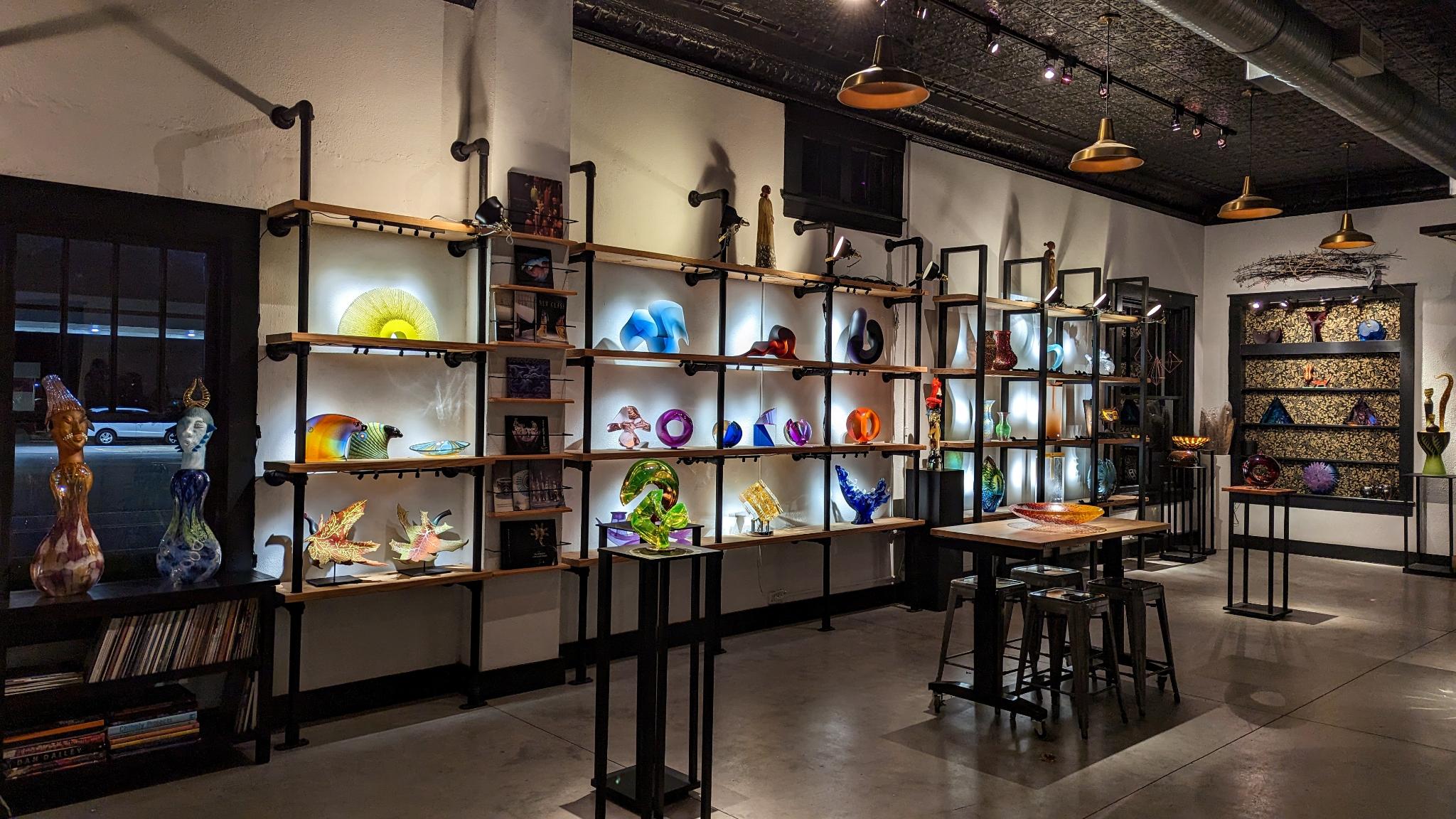
Give Your Collections Museum-Quality Displays With These Tips
You can feel the shift the second you walk into certain homes. The sofa matters less. The rug fades into supporting cast territory. Your eye moves straight toward the glass. Maybe it’s a towering Venetian form glowing amber near a stairwell. Maybe it’s a quietly brutal slab of cast glass sitting inside a recessed wall niche that catches late afternoon light like frozen water. Either way, the room isn’t arranged around furniture anymore. It’s orbiting a single object. More collectors and designers are abandoning the old gallery pedestal approach in favor of spaces that breathe around the artwork itself, pulling museum-quality glass into kitchens, libraries, bedrooms, and conversation-heavy living rooms where people still spill wine, leave books open, and argue about dinner plans. The result feels less ceremonial and more intimate, which is exactly why the movement keeps spreading.
The Room Starts With the Piece
A growing number of interiors now begin with the artwork instead of ending with it. Designers working within the world of gallery-led interior compositions often treat a major glass sculpture almost like an architectural instruction rather than an accessory, allowing its scale, color temperature, and translucency to dictate the emotional rhythm of the room before furniture is even selected. You see this especially in homes where a single handblown work carries dramatic movement inside the glass itself because every nearby material starts reacting to it. Matte plaster walls appear softer beside smoked crystal. Walnut cabinetry deepens near cobalt forms. Even the negative space changes personality depending on how the glass bends light through the room at different hours. The smartest collectors understand something museums figured out years ago: people don’t remember isolated objects nearly as much as they remember the atmosphere those objects create around them. That realization has pushed residential interiors toward a slower, more intentional kind of arrangement that feels curated without becoming stiff.
Niches Are Replacing Pedestals
The lonely pedestal sitting in the middle of the room has started to feel strangely temporary, almost like the sculpture hasn’t found its permanent home yet. Instead, many designers are building recessed architectural displays directly into walls using wall integrated glass showcases that make artwork feel embedded into the life of the home rather than placed on top of it afterward. A niche changes the emotional reading of an object because it creates containment and permanence at the same time. Fragile pieces suddenly feel protected without looking hidden away. Some homeowners line these recessed spaces with limestone, dark oak, or hand-troweled plaster so the surrounding texture amplifies the sculpture instead of competing with it. Others build shallow alcoves along corridors where natural shadows gather during the evening, giving the glass a slow-moving cinematic quality that changes as people pass through the house. The effect is quieter than a traditional display strategy, though somehow more powerful because the artwork feels inseparable from the architecture itself.
Light Has Become the Real Medium
Collectors used to think about lighting after the installation was complete. Now lighting decisions often happen first because glass is less a static object than a responsive surface that mutates constantly depending on illumination. Designers working with museum quality lighting systems have become obsessive about beam spread, reflection control, dimming temperature, and UV protection because one careless spotlight can flatten a masterpiece into something decorative and lifeless. Layered lighting works best in lived-in interiors because it avoids the cold theatrical effect people associate with retail galleries. A concealed wash light behind shelving might soften the silhouette while a narrow directional beam pulls out texture buried inside the piece itself. During the day, indirect sunlight often matters more than artificial fixtures because natural movement gives the sculpture emotional range that static lighting never can. Good glass interiors don’t merely illuminate objects. They choreograph atmosphere hour by hour, almost like the room develops a different personality after sunset.
The Planning Happens Long Before Installation
One thing collectors rarely discuss openly is how much logistical planning happens before a major glass piece ever enters the room. Measurements get revised repeatedly. Sightlines change. Wall depths shift by inches. Designers frequently build digital moodboards, installation mockups, and presentation decks to help clients visualize how a sculpture will interact with surrounding textures and circulation patterns before construction even begins. Many studios now turn a JPG into a PDF so sketches, reference photography, finish palettes, and placement concepts can move fluidly between architects, fabricators, lighting consultants, and homeowners without losing visual continuity. That workflow sounds technical until you realize how emotional these decisions become once a six-figure object is involved. Nobody wants to discover too late that reflections from a nearby window erase the depth of the piece at noon every day. The digital planning stage has quietly become part of the artistic process itself because it allows collectors to shape environments around the emotional experience they want visitors to have once the installation is complete.
Transparency Changes the Emotional Tone of a Home
Glass carries emotional contradictions that few materials can replicate. It feels heavy and weightless at the same time. Permanent yet vulnerable. Present yet constantly changing. That’s partly why designers experimenting with interior glass design strategies are increasingly layering translucent materials throughout a room instead of isolating them to a single object. Smoked mirrors, reflective plaster, bronze hardware, polished stone, and sheer textiles all start participating in the same visual conversation once museum-quality glass enters the environment. The room becomes less about decoration and more about light behavior. Shadows soften differently. Corners gain depth. Reflections create movement where none existed before. In many homes, the artwork ends up influencing the emotional atmosphere more than color palettes ever could because transparency changes how people physically experience openness, calmness, and visual tension inside a space. You stop looking only at the sculpture. You start noticing how the entire room reacts to it.
Living With Fragile Art Requires Restraint
The challenge, of course, is that people still need to live in these rooms. Dogs run through them. Kids lean on things. Guests wave their arms around while telling stories after midnight. Creating a comfortable environment around valuable glass requires a strange combination of discipline and looseness that many collectors learn through experience rather than instruction manuals. Designers who specialize in homes with display glass art pieces often avoid overcrowding nearby surfaces because visual clutter increases both physical risk and psychological tension. Seating usually stays low enough to preserve sightlines while remaining comfortable enough for long evenings spent actually using the room. Some collectors install discreet security systems or vibration-sensitive bases that nobody notices until they need them. Others simply edit more aggressively, removing unnecessary furniture so the artwork has enough breathing room to exist safely without turning the home into a sterile showroom. That balance matters because the most memorable interiors never feel guarded. They feel inhabited.
The Future Looks More Personal Than Formal
The old idea that museum-quality glass belongs inside pristine galleries has started collapsing under the weight of changing taste. Collectors want emotional proximity now. They want to eat dinner beside extraordinary objects instead of visiting them occasionally behind velvet ropes and polished concrete floors. Designers have responded by creating interiors where artwork participates in daily life without losing its sense of reverence or fragility. The best rooms achieve something difficult because they remain deeply functional while still carrying the emotional charge of a curated exhibition space.
Discover the transformative beauty of contemporary glass art at HABATAT Galleries and view a stunning collection of world-class pieces.
Article by: Cary Maloney